
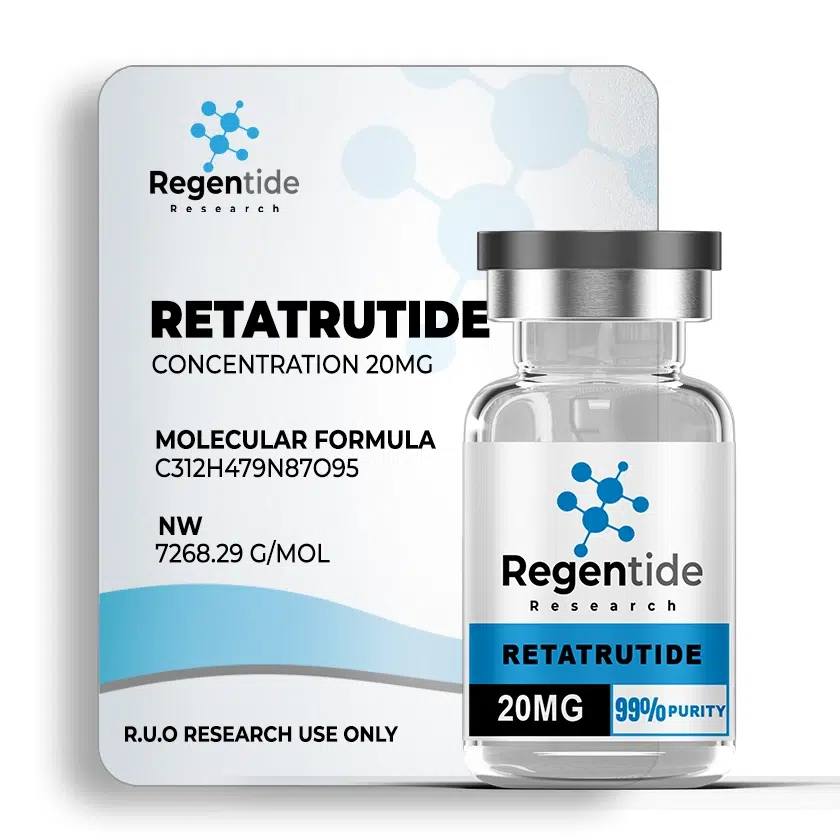
Buy Retatrutide 20mg peptide high purity online REGENTIDELAB
Retatrutide is an investigational triple-hormone receptor agonist being studied for obesity and metabolic disease. It is designed to act on three key pathways involved in appetite and energy balance:
- GLP-1 (glucagon-like peptide-1)
- GIP (glucose-dependent insulinotropic polypeptide)
- Glucagon receptors
This multi-target mechanism makes it one of the most advanced compounds currently being studied in the metabolic and weight management field.
What is Retatrutide?
Retatrutide (LY3437943) is an experimental peptide developed by Eli Lilly for the treatment of:
- Obesity
- Type 2 diabetes
- Metabolic dysfunction-related conditions
It works by influencing appetite regulation, insulin response, and energy expenditure simultaneously.
Unlike older GLP-1 medications, retatrutide is designed as a “triple agonist” therapy, meaning it affects more than one hormonal pathway at the same time.
Why “20mg” is commonly mentioned
The term “20mg reta” typically appears in:
- Research discussions
- Informal online peptide markets
- Misleading or non-pharmaceutical listings
However, in official clinical research:
- Retatrutide is administered as a weekly injection in carefully controlled dose escalation protocols
- Doses are typically studied in much smaller incremental ranges, not fixed “20mg capsules or vials”
Clinical trials use structured titration schedules rather than static high-dose products.
Regulatory status (very important)
As of 2026:
- Retatrutide is not FDA-approved
- It is not approved in the UK or EU
- It is only available in Phase 3 clinical trials
- It cannot be legally sold as a consumer product or supplement
Retatrutide remains strictly an experimental medicine under development.
Any product claiming to be “retatrutide 20mg for sale” is not an approved pharmaceutical product.
What research shows so far
Clinical trial data has shown strong metabolic effects:
- Significant reductions in body weight over 24–48 weeks
- Improved insulin sensitivity markers
- Reduced appetite and caloric intake
- Increased energy expenditure compared to earlier GLP-1 drugs
In some studies, average weight loss has reached over 20% of body weight at higher dose groups, depending on trial duration and population.
These results are among the most significant seen in obesity pharmacology research.
How it differs from other GLP-1 medications
Retatrutide is often compared with:
- Semaglutide (GLP-1 only)
- Tirzepatide (GLP-1 + GIP)
Key differences:
- Retatrutide activates three metabolic pathways instead of one or two
- It increases both appetite suppression and energy expenditure
- It is still in late-stage clinical development, unlike approved drugs
Safety and side effects (based on trials)
Because it is still investigational, safety data comes only from controlled studies.
Reported side effects include:
- Nausea
- Gastrointestinal discomfort
- Vomiting in some cases
- Reduced appetite (often significant)
- Fatigue during dose escalation
Researchers also monitor:
- Excessive weight loss risk
- Muscle mass reduction
- Long-term metabolic effects
Important warning about online “20mg products”
Any online listing for “retatrutide 20mg” may involve:
- Counterfeit compounds
- Mislabeling or incorrect dosing
- Non-sterile manufacturing
- No pharmaceutical oversight
- Unknown purity or safety risks
Authorities have repeatedly warned that unapproved GLP-1 and retatrutide-like products circulating online are unsafe and illegal in many regions.
Why reta is trending
Search demand is growing due to:
- Extremely strong weight-loss results in trials
- Comparisons to Ozempic and Mounjaro
- Interest in next-generation obesity treatments
- Viral discussions in fitness and biohacking communities
Some trial participants have experienced weight loss levels approaching those seen in bariatric surgery outcomes, increasing public attention.
Expected approval timeline
Based on current development:
- Phase 3 trials: ongoing
- Regulatory submission: expected after completion
- Potential approval: late 2020s (if successful)
Until then, it remains strictly investigational and unavailable via prescription.
Evidence-based alternatives
For safe and legal metabolic support, consider:
Clinically approved options
- Semaglutide
- Tirzepatide
Lifestyle-based strategies
- Calorie-controlled nutrition
- Resistance and aerobic exercise
- Sleep and stress optimization
These approaches are proven, regulated, and medically supervised options.
SEO strategy tip (important)
To rank safely, avoid:
Instead use:
- “Retatrutide 20mg: Research, Benefits & Safety Explained”
- “What is Retatrutide? Full GLP-1 Triple Agonist Guide”
- “Retatrutide vs Semaglutide vs Tirzepatide Comparison”
This helps you:
- Capture high-intent search traffic
- Avoid compliance and advertising restrictions
- Build long-term authority in the GLP-1 niche
Bottom line
Retatrutide is a promising experimental metabolic therapy showing strong results in clinical trials, but it is not approved or legally available for consumer purchase. Any “20mg” products found online are not regulated pharmaceutical versions and should be treated with caution.